



Almost every returned smart lock comes back for the same reason: it did not fit the door. That is avoidable with a tape measure and five minutes, and nobody publishes the check clearly, so here it is.
Three measurements. Take them before you order.
1. Door thickness
Open the door and measure across its edge, from the inside face to the outside face. Measure the door, not the frame.
US residential doors are almost always 1 3/8 inches (35 mm) or 1 3/4 inches (44 mm). Exterior doors are usually the thicker of the two. Commercial and fire doors run thicker.
Satella Power locks fit 35 to 65 mm (1 3/8 to about 2 9/16 inches), which covers both standard sizes with room above. If your door is thicker than 65 mm, call us before ordering and ask about an extended spindle.
2. Backset
Measure from the edge of the door to the centre of the large hole the handle passes through.
Two sizes exist in practice: 2 3/8 inches (60 mm) and 2 3/4 inches (70 mm). Both are common, and which you have depends on the builder rather than the age or type of the door.
The mortise in the box adjusts between the two, so you do not choose at checkout. You do need to know which you have when you fit it, because setting the mortise is done before it goes into the door edge.
3. Bore diameter
Measure across the large hole through the face of the door.
The standard is 2 1/8 inches (54 mm), and it has been the standard for decades, so a door that has ever had a modern lock on it will have this hole. The smaller hole in the door edge, for the latch, is normally 1 inch (25 mm).
If your door has no bore at all, or a non-standard one, you are into drilling with a hole saw and a jig. That is a job for a carpenter unless you have done it before.
The fit table
| Lock | Door thickness | Backset | Bore | Door types |
|---|---|---|---|---|
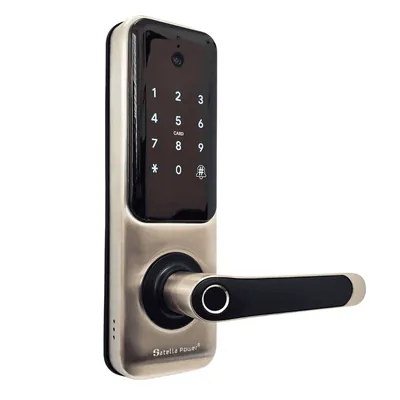
| SP-US23 Ultra | 35 to 65 mm | 60 or 70 mm, adjustable | 54 mm standard | Wood, steel, stainless, aluminium, composite, PVC |
| SP-US23 | 35 to 65 mm | 60 or 70 mm, adjustable | 54 mm standard | Wood, steel, stainless, aluminium, composite, PVC |
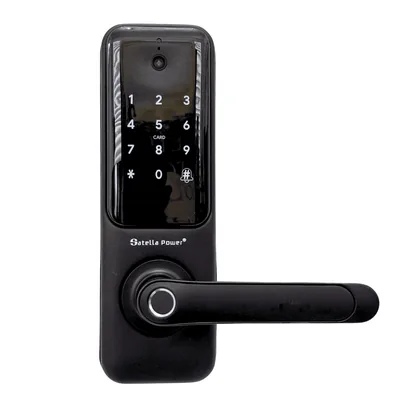
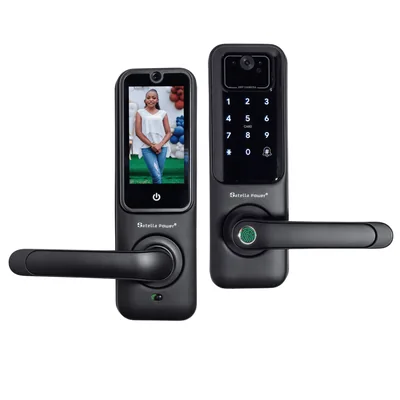
| Zebulun | 35 to 65 mm | 60 or 70 mm, adjustable | 54 mm standard | Wood, steel, composite, PVC |
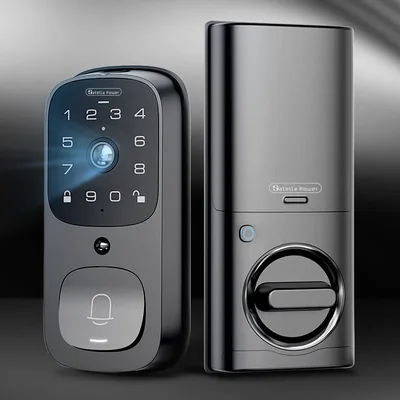
| SEER Lock | 35 to 65 mm | 60 or 70 mm, adjustable | 54 mm standard | Deadbolt fitting |
| SmartBell SP-501 | 35 to 65 mm | 60 or 70 mm, adjustable | 54 mm standard | Deadbolt fitting |
| Alpha-B | 35 to 65 mm | 60 or 70 mm, adjustable | 54 mm standard | Deadbolt fitting |
| Simplicity | 35 to 55 mm | 60 mm | 54 mm standard | Interior and office lever doors |
Five things that stop an installation
The door is thicker than the spindle. The square bar that joins the two handles has a length. Past the maximum thickness the handles will not seat. This is the measurement people skip.
The backset was measured to the edge of the hole, not the centre. An easy error that puts you 27 mm out. Measure to the middle.
The strike plate is misaligned. Not a fit problem but the most common post-install complaint: the door must be pulled to lock. Loosen the strike, move it a few millimetres, retighten.
The door has a mortise lock, not a bored lock. Older doors, particularly in city apartments, sometimes have a rectangular pocket rather than a round bore. These locks do not fit that without a conversion plate.
A storm door or screen door is in the way. Exterior panels project. Measure the clearance between the door face and anything in front of it before you buy a lock with a camera on the outside.
What to do with the numbers
If thickness is 35 to 65 mm, backset is 60 or 70 mm, and bore is 54 mm, every lock in the table fits and the installation is a screwdriver job. The installation guide takes it from there.
If any measurement is outside those ranges, call 888-400-0607 with the three numbers and the door type before ordering. It takes two minutes and saves a return.
Questions
What is a backset? The distance from the edge of the door to the centre of the large hole the handle passes through. It is either 60 mm or 70 mm on almost every door.
What if my door is thicker than 65 mm? Call 888-400-0607 before ordering and ask about an extended spindle. Do not order and hope.
How do I measure the bore? Across the large hole in the face of the door. The standard is 54 mm, and any door that has had a modern lock will have it.
My door has no holes at all. Now what? That is a drilling job with a hole saw and a jig, and worth paying a carpenter for unless you have done it before.
Will the lock fit a uPVC door? Yes, if the thickness and backset are in range. uPVC doors often use a multipoint mechanism, so check what is in the door edge before ordering.