





The honest answer is no, not reliably, and you should be suspicious of any lock marketed as if the answer were yes.
That is not a fault in the product. It is how the sensor works, and once you understand it, the failures become predictable and mostly avoidable.
What the sensor is actually reading
A capacitive fingerprint sensor, which is what almost every modern smart lock uses, measures tiny differences in electrical capacitance across a grid. The ridges of your fingertip touch the surface and the valleys do not, and that difference in distance is the pattern it records.
Water is conductive. A film of it across the sensor fills the valleys and shorts the difference the sensor depends on. The ridge pattern is still on your finger; the sensor can no longer see it.
Optical sensors, which photograph the fingerprint instead, fail differently: water scatters light and washes out contrast. Different mechanism, same outcome.
What degrades recognition, in order
Standing water. A finger straight out of a sink or off a rain-soaked coat will fail more often than it succeeds. Wipe and try again.
Cold. Cold fingers lose moisture and blood flow, and the ridges flatten. Below freezing, recognition degrades noticeably for most people. This is why phone fingerprint readers fail in winter too.
Very dry skin. The opposite problem and just as real. Some capacitance needs skin contact, and a genuinely dry fingertip in a dry heated house reads badly. A trace of hand cream, rubbed in and wiped off, works.
Worn or damaged fingertips. Trades that abrade the fingers, bricklaying, gardening, guitar playing, wear the ridges down. Some people in manual trades cannot reliably use fingerprint recognition on any device, and that is worth knowing before you buy a lock for a workshop.
Dirt and grease on the sensor. A wipe with a dry cloth fixes it, and almost nobody thinks of it.
What fixes most of it: enrol properly
Most day-to-day failures trace back to a bad enrolment rather than a bad sensor. Three habits change the failure rate.
Press, do not swipe, and lift between presses. The lock asks for the same finger several times because it is building one template from several impressions. Lifting fully between each one gives it variety to work with.
Roll the finger slightly. Present the pad centred on the first press, then rolled a little left, then a little right. Most real-world presentations are off-centre, and a template that only knows the dead centre of your fingertip will reject them.
Enrol two fingers per person. One from each hand. It costs two slots out of 200 and it covers the cut thumb, the full right arm and the plaster.
If one person fails repeatedly, delete their enrolment and do it again with those three habits. It solves it far more often than a factory reset does.
What to do when it still fails
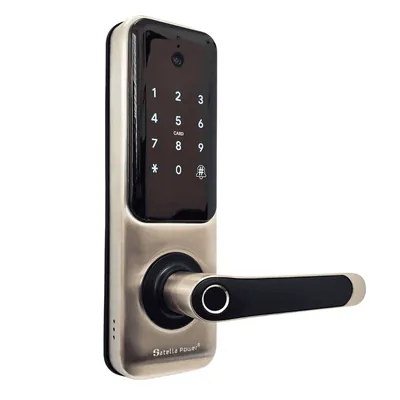
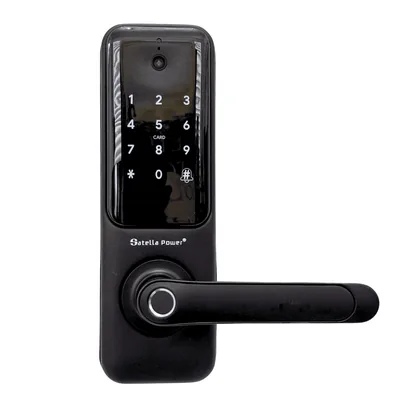
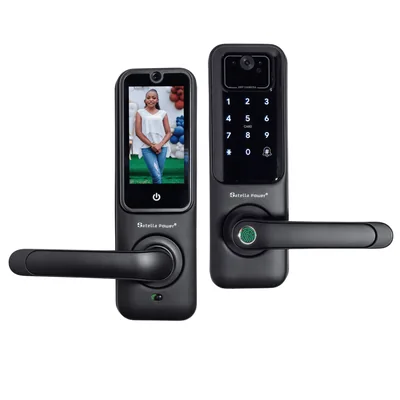
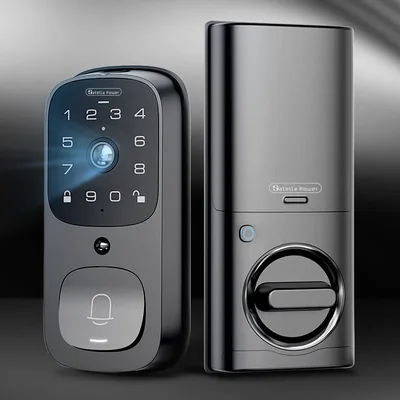
Every Satella Power lock except the Simplicity lever has a keypad, and every one has a mechanical key. That is the design answer to a sensor that cannot be perfect: the fingerprint is the convenience, the code is the backup, the key is the guarantee.
For a door where hands are wet by definition, a pool gate, a workshop, a kitchen entrance, plan on the keypad as the primary and the fingerprint as the shortcut, rather than the other way round.
Weather and the outside panel
The exterior panel is built for outdoor use, and rain running down a door does not harm it. What rain does is put water on fingers, which is the recognition problem above rather than a durability problem.
A porch, a canopy or a recessed doorway measurably improves winter reliability, because the finger arrives drier. If your door is fully exposed and faces the weather, expect to use the code more often between November and March.
Questions
Is the lock waterproof? The outside panel is weather-resistant and is designed to sit on an exterior door. It is not designed for submersion, and no door lock is.
Does a hot day help? Slightly. Warm hands read better than cold ones. Sweat does not: a wet fingertip is a wet fingertip whatever warmed it.
Do fingerprints change over time? Slowly, with age and wear. If someone who used to work reliably starts failing, re-enrol them. It takes a minute.
Can I use a knuckle or a toe? The sensor reads any ridged skin, so a knuckle can be enrolled. It works, and it is a genuine answer for someone whose fingertips are worn down.
Do gloves work? No. Capacitive sensors need skin.
Every lock in the range has the keypad and key backup that this article assumes. Call 888-400-0607 if you are fitting one somewhere hands are wet as a rule, and we will tell you which model suits.