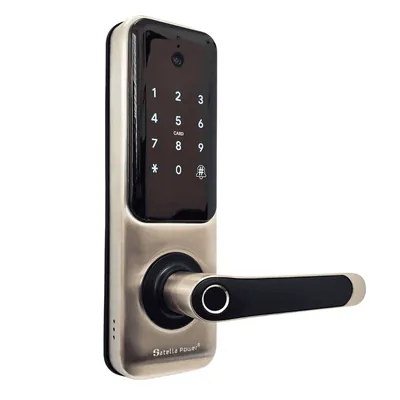
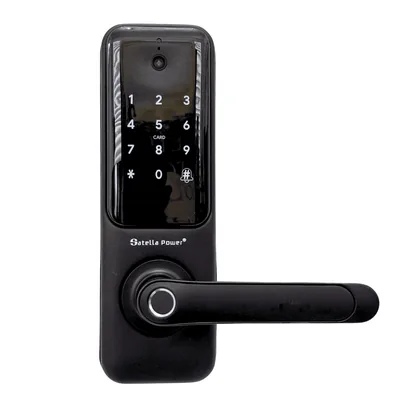
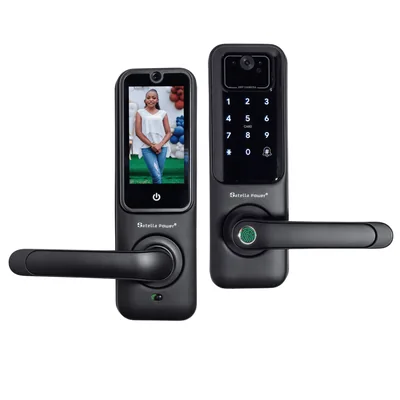
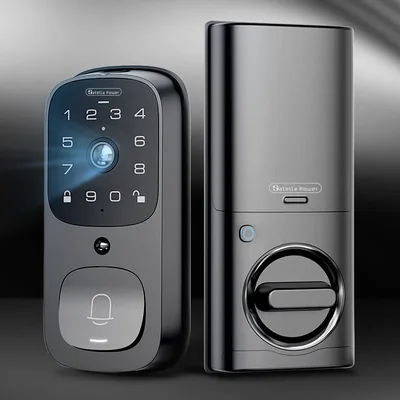





A landlord who refuses a smart lock is almost never objecting to the technology. They are worried about three specific things: losing their own access, damage to the door, and what happens when you move out. A request that answers all three before they are asked usually gets a yes.
Check the lease first
Look for a clause about alterations, fixtures or changing the locks. Most residential leases say one of three things.
Alterations require written consent. The common case. You are asking for that consent, which is what the letter below does.
Changing locks is prohibited. Sometimes absolute, sometimes it means “without giving the landlord a key”. Ask which is meant rather than assuming the worse reading.
Nothing at all about locks. Ask anyway, in writing. A silent lease is not permission, and you want the yes on record when you move out.
In many states a landlord must retain access for repairs and emergencies, so any arrangement where they cannot get in is going to be refused, correctly.
Answer the three worries before they are raised
Access. Say clearly that they keep a key, and that these locks keep the mechanical keyway. Offer to enrol their fingerprint or give them a permanent code. Whichever they prefer, put it in writing.
Damage. The lock uses the holes the existing lock already occupies. No new drilling on a door that has a standard bore. Say so plainly, and offer to have it fitted professionally at your own cost if they would rather.
Move-out. Commit to refitting the original lock and taking yours with you. Photograph the original hardware before you touch it and keep every screw in a labelled bag. Say that in the letter, because it is the sentence that turns a maybe into a yes.
The letter
Copy this, fill in the brackets, and send it by email so there is a record.
Dear [landlord or agent name],
I would like your permission to fit a keyless entry lock to the front door of [address] at my own expense.
The lock I have in mind replaces the existing handle set and uses the same holes in the door, so no new drilling is needed and the door is not modified. It opens with a fingerprint, a keypad code or a mechanical key.
To be clear about access: you would keep a working key, and I am happy to give you a permanent entry code as well, so your access is the same as it is today or better.
When my tenancy ends I will refit the original lock and take mine with me, leaving the door exactly as I found it. I will photograph the existing hardware before any work and keep all the original parts.
If you would prefer the work done by a locksmith rather than by me, I will arrange and pay for that.
Please let me know if you are happy for me to go ahead, or if there is anything you would like to change about the arrangement.
Thank you,
[your name]
[phone] · [email]
If they say no
Ask why, because the reason is usually specific and often solvable. “The lock has to match the other units” is answered by choosing a finish. “I want a locksmith to do it” is answered by paying for one. “I do not want a camera on my building” is answered by choosing a model without one, like the Alpha-B.
If the answer stays no, it stays no. Fitting a lock against an explicit refusal risks your deposit and your tenancy, and no keypad is worth either.
If they say yes
Get it in writing, even one line in an email. Then:
- Photograph the original lock from both sides before you start.
- Bag and label every original part, and keep the bag for the length of the tenancy.
- Take the three door measurements before ordering.
- Enrol the landlord’s code or fingerprint on the day you fit it, and tell them it is done.
- Diarise the refit for a week before you hand back the keys.
Questions
Can a landlord charge me for the change? Not if the door is returned as it was and you paid for the work. A deduction would need actual damage to justify it.
Does a smart lock count as a fixture? Usually not, if it is removable and you replace the original. That is precisely why the letter promises to refit.
What about a shared front door in a block? That is a communal door and the freeholder or management company decides, not your landlord. Different conversation, and usually a no.
Can I take the lock to my next home? Yes, provided the next door has a standard bore and a thickness between 35 and 65 mm. Check with the fit table.
Nothing here is legal advice, and tenancy law varies by state. If a lease clause is ambiguous and the stakes are high, ask a tenancy advice service before you act.